Resource guide
Hospice Pharmacy Costs: A Finance Leader's Guide
Most hospice finance leaders don't find out their pharmacy spend spiked until the monthly report lands, weeks after the ordering decisions that caused it were made. Under a fixed Medicare per-diem, that lag isn't just inconvenient. It's margin you can't get back. This guide is for the CFOs, controllers, and finance-minded executive directors who need to understand what actually drives hospice pharmacy cost, and how to get ahead of it instead of explaining it after the fact.

What hospice finance leaders are up against
Quick answer: Hospice pharmacy spend sits entirely inside a fixed per-diem Medicare benefit, so unlike a commercial health plan, every dollar spent on medications comes directly out of the hospice's own operating margin, not an insurer's.
Hospice pharmacy spend nationally is estimated at $3.5 to $4 billion annually across roughly 6,500 hospice providers (Access Market Intelligence, Feb 2026). At the same time, Medicare hospice expenditures overall grew from $22.1 billion in FY 2020 to $27.5 billion in FY 2024, nearly doubling from $15.5 billion in FY 2015 (CMS Hospice Monitoring Report 2025; GAO, Medicare Hospice, 2025). More patients, more locations, and more scrutiny, all under a benefit where the hospice itself carries the pharmacy risk.
On top of that, quality reporting penalties have grown sharper: since the FY 2025 rule, hospices that don’t meet CMS quality reporting requirements face a 4-percentage-point reduction to their annual payment update, up from 2 (QAPIPlus, Hospice Compliance 2025; CMS Newsroom).
The 5 real drivers of hospice pharmacy cost
Quick answer: Negotiating cheaper drug prices only goes so far. The bigger opportunity comes from addressing five underlying drivers of pharmacy spend.
Our post 5 Key Drivers of Hospice Pharmacy Costs breaks these down in full. In short:
- Number of medications per patient. More prescriptions mean more delivery trips, more nursing time, and more chances for something to go wrong.
- Unnecessary medications. Drugs that no longer improve a patient's quality of life can trigger side effects that create their own new medication needs.
- Ineffective medications. Inhalers for a patient who's no longer breathing independently, antibiotics, antivirals: medications ordered to comfort a family rather than benefit the patient at end of life.
- Reaching for the cheapest option by default. Cheaper isn't always better. A lower-cost alternative with a longer mail-order delivery window can cost more in comfort and in nurse time than it saves in dollars.
- Poor clinical cost management. Without real-time reporting and hospice-trained clinical support, ordering patterns drift unnoticed until the bill arrives.
Spread pricing vs. pass-through pricing
Quick answer: Spread pricing lets a vendor bill a hospice one price while paying the pharmacy less and keeping the difference; pass-through pricing shows a hospice the actual cost of medications and delivery, without markup.
This is the single biggest lever finance leaders have over predictability, and it's often the least visible line item in a contract. Our post How Much Do PBMs Cost Hospices? covers all three common pricing structures, bundled per-diem, spread pricing, and pass-through, and why hidden margin in a spread-pricing contract makes it nearly impossible to negotiate from a position of real information the next time a contract renews.
The traditional PBM model that much of the industry evolved around wasn't built around this problem. It was built to optimize pharmacy benefits across millions of commercially insured members, using spread-based pricing and retrospective reporting. Under hospice's fixed per-diem, where every unnecessary delivery fee and every high-cost script comes straight off the bottom line, that model creates exactly the blind spots finance leaders are stuck reconciling every month.
What "Predictable PPD" actually means
Quick answer: Predictable per-patient-day (PPD) pharmacy spend means seeing pharmacy spend at the moment an ordering decision is made, not fifteen to thirty days later in a retrospective report, so leaders can act on today's numbers instead of explaining last month's.
PPD, or per-patient-day pharmacy spend, is the metric most hospice finance teams already track. The goal isn't simply a lower number. It's a number you can trust and forecast. BetterRX Guardrails™, our configurable clinical and financial standards built into the ordering workflow, are designed around this exact idea: guiding a prescribing decision toward a cost-effective, clinically appropriate option at the moment it's made, rather than flagging it after the fact.
One feature inside that system, Interchange Manager™, pre-approves lower-cost therapeutic alternatives that appear the moment a medication is prescribed, letting clinicians switch with one click. In beta testing, hospices using our Delivery Consolidation Guardrail saw more than 8% lower delivery fees per patient compared to before using the feature (median values, among 85 hospices with low override rates, BetterRX Beta Findings). Real-time cost visibility like this is the difference between managing PPD proactively and discovering it retroactively.
A real example: cost visibility in practice
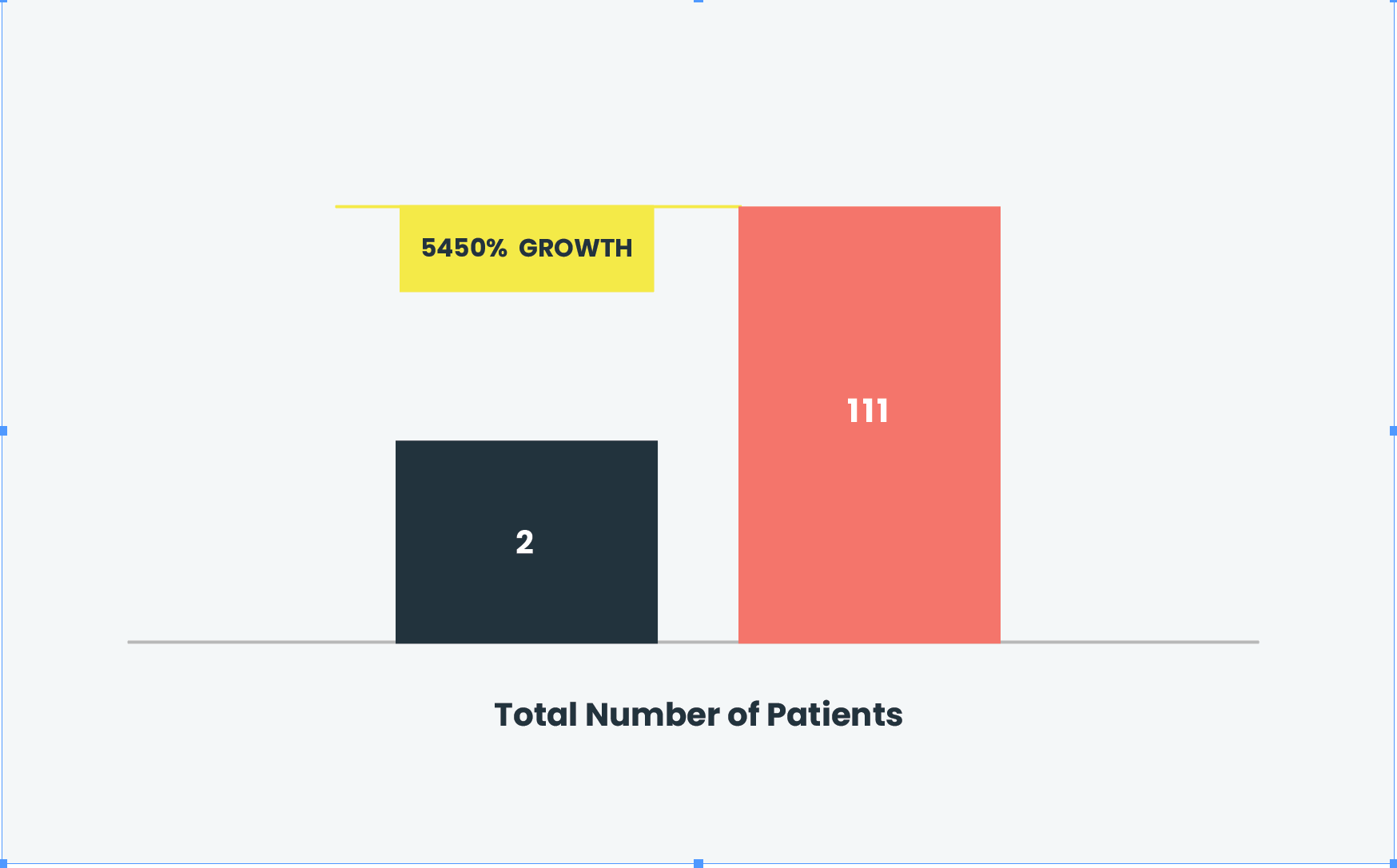
Quick answer: In one BetterRX case study, a West Coast hospice reduced its per-patient-day (PPD) pharmacy spend after implementing connected medication ordering and EMR integration.
Numbers like that come from a specific hospice's experience, not a guarantee every organization will see the same result, but the pattern is worth understanding: cost reductions tended to follow operational changes (connected ordering, real-time data, mobile access for nurses) rather than a price renegotiation alone. Read the full case study for the details on what changed and how the results were measured.
Where to start
Quick answer: Start with a medication utilization review to see where spend is actually going, then move to formulary ownership and real-time reporting before renegotiating vendor pricing.
Before renegotiating a contract, most finance leaders get more value from understanding where current spend is actually concentrated. Our post 4 Benefits of Medication Utilization Reviews covers what a good review surfaces, and Proactive Cost Control: Reducing Medication Cost Variation in Hospice looks at how to reduce variation across locations before it becomes entrenched.
Across six consecutive years of BetterRX’s Voice of the Customer survey, clients reported 93.8% satisfaction with the cost-saving tools and resources that help them achieve PPD goals, and 86% reported that medication service failures decreased, with 41% reporting failures significantly decreased.
Explore more: