

.png)
Clinical
Managing Dyspnea in Hospice: A Symptom-Directed Approach to Breathlessness
In hospice, dyspnea (breathlessness) is treated based on the patient's reported distress and observable signs, not oxygen saturation alone, using comfort measures, opioids for persistent air hunger, and oxygen only when it provides real symptom relief.
Clinical
Managing Dyspnea in Hospice: A Symptom-Directed Approach to Breathlessness
What is dyspnea in hospice care?
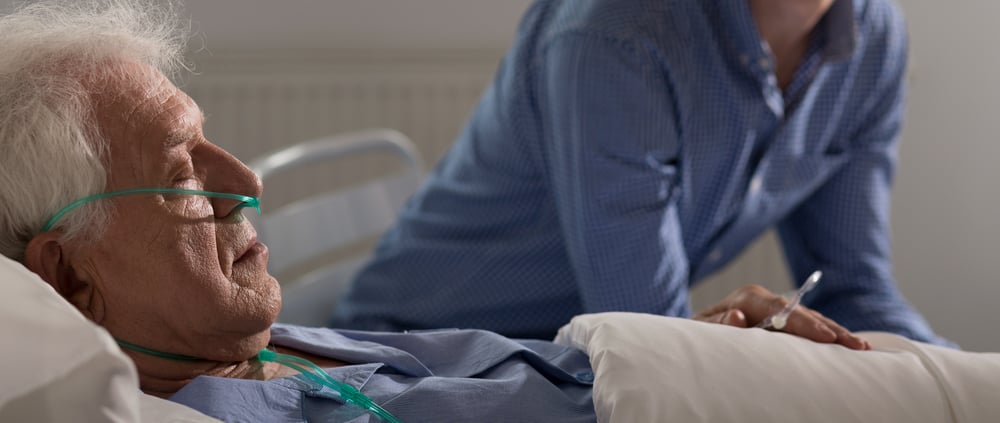
Dyspnea is the medical term for shortness of breath, breathlessness, or "air hunger." It's one of the most common and distressing symptoms in advanced illness, and hospice teams treat it as a patient-reported experience rather than a lab value.
Does low oxygen saturation always mean a patient is having trouble breathing?
No. Dyspnea and oxygen saturation don't always match — a patient can feel very breathless with a normal pulse-ox reading, or have low oxygen and appear comfortable. Hospice care prioritizes the patient's symptoms and visible distress over the oxygen number.
How do hospice teams treat breathlessness?
- Assess distress — ask the patient directly, or watch for signs like agitation, labored breathing, or a fearful expression if they can't communicate.
- Identify possible causes — bronchospasm, fluid overload, infection, anxiety, or disease progression.
- Start comfort measures first — positioning, a fan on the face, a calm environment, and reduced stimulation.
- Add medication or oxygen if needed — opioids for persistent air hunger; oxygen only for symptomatic low oxygen or clear comfort benefit.
- Reassess regularly — the plan changes as the patient's strength and abilities decline.
Do opioids help with shortness of breath?
Yes. For persistent or distressing dyspnea, low-dose opioids are a standard, evidence-based hospice treatment — they ease the brain's perception of air hunger, not just pain. They can be used well before end-of-life and are titrated individually.
Is oxygen always the right treatment?
No. Oxygen helps when there's symptomatic low blood oxygen or clear patient-reported comfort. Without that, it may add equipment burden without added relief — so hospice teams reassess its ongoing value rather than using it automatically.
What can a caregiver do at home during an episode?
Stay calm and close, help the patient sit upright, point a fan at their face, reduce noise/activity, use paced breathing if the patient can participate, give PRN meds as prescribed, and call hospice if symptoms are new, worsening, or frightening.
Why do inhalers or nebulizers sometimes get changed later in hospice?
Because using a metered-dose or dry-powder inhaler correctly requires coordination and inspiratory strength that decline with illness. Hospice pharmacists reassess whether a device, route, or medication still provides real benefit versus burden — and simplify or switch as needed.
Who decides the treatment plan?
The hospice interdisciplinary team — nurses, prescribers, and pharmacists — working with the patient and family, guided by symptoms, response to treatment, and the patient's goals of care.





.png?width=1050&height=525&name=Diabetes%20Medication%20Deprescribing%20Guide%20(1).png)
.png?width=1050&height=525&name=Opioid%20Therapy%20Patient%20Guide%20(1).png)
.png?width=1050&height=525&name=Opioid%20Calculation%20Clinical%20Guide%20(1).png)
.png?width=1050&height=525&name=Medication%20Dosing%20Schedule%20Patient%20Guide%20(1).png)
.png?width=1050&height=525&name=Deprescribing%20Conversation%20Guide%20(1).png)
.png?width=1050&height=525&name=Dementia%20Medication%20Deprescribing%20Guide%20(1).png)
.png?width=1050&height=525&name=Respiratory%20Medication%20Deprescribing%20Guide%20(1).png)

.png?width=1050&height=525&name=Methadone-Patient%20Guide%20(1).png)
.png?width=1050&height=525&name=Nonoral%20Medication%20Administration-Patient%20Guide%20(1).png)
.png?width=1050&height=525&name=Depression%20Patient%20Guide%20(1).png)
.png?width=1050&height=525&name=Anticoagulant%20Medication%20Patient%20Guide%20(1).png)
.png?width=1050&height=525&name=Opioid%20Therapy%20in%20the%20Hospice%20Setting%20(1).png)
.png?width=1050&height=525&name=Respiratory%20Medication%20Patient%20Guide%20(1).png)
.png?width=1050&height=525&name=End%20of%20Life%20Expectations%20(1).png)
.png?width=1050&height=525&name=Hospice%20Symptom%20Management%20Expectations%20For%20Patients%20(1).png)
.png?width=1050&height=525&name=Nutrition%20Patient%20Guide%20(1).png)
.png?width=1050&height=525&name=Methadone%20Clinical%20Guide%20(1).png)
.png?width=1050&height=525&name=Pain%20Assessment%20Clinical%20Guide%20(2).png)
.png?width=1050&height=525&name=Sucralfate%20Slurry%20(1).png)
.png?width=1200&height=600&name=Hepatic%20Encephalopathy%20Clinical%20Guide%20(1).png)