



5 min read
7 Proven Ways to Reduce Hospice Medication Costs Without Compromising Care
BetterRX
:
Nov 18, 2026, 12:15:34 PM
Reducing hospice medication costs means identifying and eliminating unnecessary pharmacy spend, through formulary management, smarter prescribing, and optimized pharmacy partnerships, without changing the quality of care a patient receives. The biggest savings almost always come from decisions made before a medication is ordered, not from cutting corners afterward. BetterRX builds these decisions into Intelligent Medication Management, part of The Better Way to Manage Hospice Medications.
Why Medication Costs Are Outpacing Hospice Budgets
Hospice organizations operate under a fixed, per-diem Medicare benefit, so the hospice itself bears the cost of medications rather than passing that cost to an insurer (CMS, Medicare Hospice Payment). That structure makes every unnecessary delivery fee, every high-cost medication ordered without a check, and every missed formulary update a direct hit to the organization's margin, not a line item someone else absorbs.
Cutting costs by simply denying medications or delaying fulfillment isn't a real strategy. It shows up almost immediately as patient discomfort and nurse frustration. The strategies below reduce spend by improving the decisions made earlier in the process, not by rationing care.
7 Proven Ways to Reduce Hospice Medication Costs
Use this as a starting checklist for a cost review.
1. Build clinical and financial guardrails directly into the ordering workflow, so a high-cost medication gets flagged before it's ordered instead of discovered on a report weeks later, when the spending decision can no longer be undone.
2. Pre-approve lower-cost, clinically appropriate therapeutic alternatives so clinicians can switch with one click instead of paging a medical director for every substitution, which keeps the decision fast enough not to slow down patient care.
3. Consolidate non-urgent deliveries headed to the same pharmacy into a single trip, while keeping STAT and after-hours orders excluded by default and letting clinicians override to send meds immediately, so cost savings never come at the expense of a patient who needs a medication right away.
4. Keep formulary ownership with the hospice and update it in real time, rather than waiting on a change fee or a phone call to a pharmacy benefit manager, so clinical staff can respond to a patient's changing needs the same day.
5. Choose transparent, pass-through pricing over spread-based pricing, so the hospice can see the real cost of every medication and delivery, instead of trusting a vendor's summary of what it should cost.
6. Review utilization and per-patient-day (PPD) performance daily instead of monthly, so a cost driver gets addressed while it's still small and before it repeats across dozens of additional orders.
7. Build deprescribing conversations into routine interdisciplinary team meetings, since removing a medication that no longer serves the patient lowers cost and often improves comfort at the same time, making it one of the few savings strategies that serves both the budget and the patient.
None of these seven strategies work well in isolation. A pre-approved alternative list only helps if clinicians actually see it at the moment they're prescribing, and a transparent pricing model only matters if someone is reviewing the data it produces. The strategies compound when they're built into the same workflow instead of managed as seven separate initiatives, which is why the technology behind them matters as much as the strategies themselves.
Common Mistakes That Undermine Cost-Reduction Efforts
Even well-intentioned cost-reduction efforts can stall out, and it's usually not because the strategy was wrong. It's because the process around it didn't hold up.
Treating cost review as a quarterly finance exercise instead of a weekly or daily operational habit, which lets small leaks compound before anyone notices
Adding a guardrail or alternative-therapy list without training clinicians on why it exists, so it gets bypassed out of habit rather than adopted
Measuring savings only in aggregate, without breaking results down by location or clinician, which hides where the strategy is and isn't working
Assuming a single formulary update will hold, rather than revisiting it as new medications and generic alternatives become available
How BetterRX Puts These Strategies Into Everyday Practice
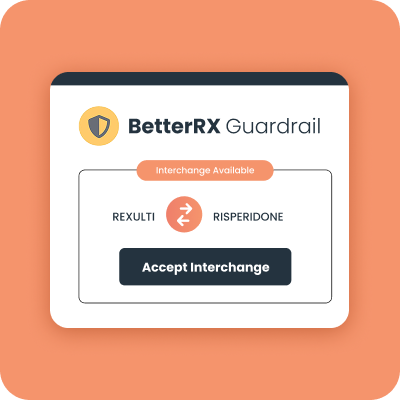
BetterRX builds most of these strategies directly into Intelligent Medication Management so they happen automatically rather than depending on someone remembering to check. BetterRX Guardrails™ surface high-cost medications and lower-cost alternatives at the exact moment of ordering, and the Delivery Consolidation Guardrail automatically groups eligible orders headed to the same pharmacy while keeping STAT and after-hours orders excluded by default, and clinicians can always override to send meds immediately.
In Beta testing, 100% of users agreed that Interchange Manager™, BetterRX's tool for pre-approved therapeutic alternatives, was easy to use and useful, and cost savings was the most frequently cited reason it mattered (Source: Interchange Manager™ Beta Survey). Per BetterRX's Voice of the Customer survey across six consecutive years, 93.8% of clients report satisfaction with the cost-savings tools and resources BetterRX provides to help them hit their PPD goals.
"Definitely the best and easiest pharmacy program I've used."
- VOC respondent
Ease matters for cost control. A cost-saving decision built into the workflow itself gets used, while one more report to review after the spending has already happened often doesn't.
What Cost Reduction Shouldn't Mean
A real cost-reduction strategy protects the medications patients actually need and simply removes the waste around them: avoidable delivery fees, high-cost drugs with an equally effective lower-cost option, and formulary gaps that force expensive workarounds. Hospice leaders evaluating any cost-reduction approach should ask whether it's reducing waste or reducing access. Only the first one is proactive cost control.
In practice, that distinction shows up in small moments: a nurse who can select a pre-approved alternative without waiting on an approval call, or a finance leader who can see a cost trend the same week it starts instead of the month after. Those moments are where proactive cost control either holds or breaks down, and they're worth designing the workflow around directly.
How to Evaluate a Pharmacy Partner's Cost Tools
1. Ask whether cost guardrails appear at the moment of ordering or only in a report delivered after the fact.
2. Confirm whether pre-approved therapeutic alternatives are visible to prescribers directly, or require a separate lookup step.
3. Check whether delivery consolidation protects STAT and after-hours orders automatically, rather than relying on staff to remember the exception.
4. Ask how quickly formulary updates take effect, since a change that takes days to process can't respond to a same-day clinical need.
Why this matters most is Predictable PPD. When cost-aware decisions happen automatically at the point of ordering instead of showing up as a surprise in a monthly report, per-patient-day spend becomes something a hospice can actually forecast rather than something it discovers after the fact.
Frequently Asked Questions
-
Building cost-aware guardrails directly into the ordering workflow, so high-cost medications and lower-cost alternatives are visible at the moment of order, typically produces faster results than retrospective cost-cutting reviews.
-
Not when it's done correctly. Real cost reduction removes waste, like avoidable delivery fees and unnecessary high-cost prescriptions, without changing which medications a patient actually needs.
-
A hospice-owned formulary that can be updated in real time, without a change fee, lets teams keep costs predictable and respond quickly to clinical needs instead of waiting on an outside vendor.
-
Yes. Consolidating non-urgent deliveries to the same pharmacy into a single trip reduces avoidable fees, while STAT and after-hours orders can still move immediately.
-
Removing medications that no longer benefit the patient lowers pharmacy spend and often improves comfort, making it one of the few cost strategies that supports both financial and clinical goals.
-
Daily or near-real-time review catches cost drivers while they're still small, rather than discovering them in a report that arrives weeks after the spending decision was made.
-
Many of them, like reviewing utilization more frequently or building deprescribing into existing interdisciplinary meetings, can start as process changes with the team already in place. The strategies that depend on point-of-order guardrails and automated delivery consolidation typically require a pharmacy technology partner that supports them natively.
Proactive Cost Control: Reducing Medication Cost Variation in Hospice
Hospice clinical administrators are facing one of the most challenging cost environments in years. Demand is rising, margins are tightening, and...