 BetterRX
Evaluating Hospice Medication Management Vendors: Key Criteria for Success
TL;DR Hospice medication management vendors should do more than transmit prescriptions electronically. The best vendors reduce nurse workload,...


Hospice clinical administrators are facing one of the most challenging cost environments in years. Demand is rising, margins are tightening, and teams are expected to deliver consistent, compassionate care while managing medication costs under Medicare’s fixed per-diem model. In that environment, even small differences in medication ordering can create major swings in hospice medication costs and per-patient-per-day performance.
That is why proactive cost control in hospice matters more than ever.
See how BetterRX customers have reduced pharmacy costs.
For hospice teams, proactive cost control does not begin with a month-end pharmacy report. It begins at the moment a medication order is placed.
Medication cost variation in hospice happens when medication ordering decisions differ across clinicians, shifts, locations, and staffing situations. In most cases, that variation is not caused by poor intent. It reflects the real conditions of hospice care.
Clinicians are making rapid decisions under pressure. They are balancing symptom control, patient comfort, caregiver needs, formulary expectations, and speed. After-hours coverage and weekend ordering add even more complexity. At the same time, many best practices still live in policy documents, training sessions, or individual memory instead of in the ordering workflow.
For hospice clinical administrators, this is a key takeaway: medication ordering variation is usually structural, not personal.
Even highly skilled clinicians can make different choices when organizational standards are not built directly into the workflow. That is what makes hospice medication cost variation so hard to control through training alone.
Training and monthly pharmacy reports still matter, but they do not solve the root problem of medication cost variation in hospice.
Pharmacy reports show what happened after the medication ordering decision has already been made. By the time leaders review the data, the financial impact is already locked in, and the same cost patterns may have repeated across the census.
Training assumes clinicians will remember preferred alternatives, formulary guidance, and medication cost expectations during urgent patient situations. In real hospice care, that often means nights, weekends, symptom calls, and high-stress visits. That is a difficult burden to place on any team.
This is why many hospices continue to struggle with unpredictable medication costs even when they invest in education, policy updates, and reporting reviews. Retrospective tools can identify the problem, but they do not prevent it at the point of decision.
Proactive cost control in hospice means supporting clinicians before the medication order is submitted, not after.
Instead of relying only on reminders, policies, or retrospective reporting, proactive cost control embeds real-time guidance directly into the medication ordering workflow. That matters because under Medicare’s fixed per-diem model, a high-cost medication day is reimbursed the same as a lower-cost medication day. There is no opportunity to recover those costs later.
Real hospice cost control has to happen in real time.
For clinical administrators, that means creating a system that helps clinicians make cost-conscious, clinically appropriate medication decisions while protecting patient comfort and care quality.
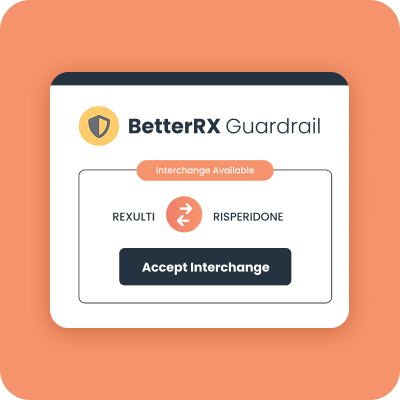
Medication Ordering Guardrails are a practical and scalable way to reduce hospice medication cost variation. They are configurable clinical standards embedded directly into the medication ordering workflow. They provide real-time support at the exact moment a clinician is making a decision, helping teams reduce avoidable cost variation without slowing care.
Medication ordering guardrails can help hospice teams by:
The result is a more consistent, predictable approach to medication ordering across the organization. For hospice clinical administrators, that means stronger hospice cost control, better formulary compliance, and more stable medication cost performance.
Every hospice has clinicians who naturally make strong, cost-conscious medication decisions. They understand formulary intent, know when lower-cost therapeutic equivalents are appropriate, and recognize when a true clinical exception is needed.
The challenge is that this kind of expertise is difficult to scale when it lives inside a few experienced team members.
Medication ordering Guardrails help solve that problem by turning individual expertise into a repeatable system. They bring your organization’s best clinical judgment into the workflow so every clinician, including new hires, float staff, weekend coverage, and after-hours teams, has access to the same real-time support.
In that sense, medication ordering Guardrails help replicate your best nurse. They do not replace clinical judgment. They extend it across the team. For hospice administrators, that means fewer gaps between the strongest clinician and the rest of the organization, which leads to more consistent medication decisions and better proactive cost control.
Workflow-embedded standards improve both hospice medication cost control and day-to-day operational consistency.
Benefits include:
For hospice clinical administrators, these benefits can translate into practical improvements such as:
This is what makes workflow-embedded standards so valuable. They support both better clinical operations and better hospice cost control.
Hospice staff turnover makes medication consistency harder to maintain.
When experienced clinicians leave, the practical knowledge they carry often leaves with them. New team members may still be learning the formulary, preferred medication pathways, and when an exception is clinically appropriate. Without workflow-embedded standards, hospices are forced to rely heavily on tribal knowledge and memory, which makes cost control difficult to sustain over time.
That is why proactive cost control in hospice is not only a financial strategy. It is also a consistency strategy.
Medication ordering Guardrails help preserve organizational knowledge inside the workflow so that teams can maintain more consistent medication ordering decisions even during staffing changes.
A strong first step is identifying the medication ordering moments that create the most hospice medication cost variation and the greatest cost impact.
These often include:
From there, leaders can define preferred defaults, clarify acceptable clinical exceptions, and embed those standards directly into the medication ordering workflow.
This is where proactive cost control becomes operational instead of theoretical.
The most important takeaway for hospice clinical administrators is simple:
The best time to reduce medication cost variation is before the order is submitted, not after the monthly pharmacy report arrives.
When hospices rely only on training, memory, and retrospective reporting, medication ordering variation continues. When best practices are embedded directly into workflow, consistency becomes much more achievable.
Proactive cost control in hospice is about supporting better medication decisions in real time. And when hospice teams have that support, they are in a stronger position to protect patient care, improve formulary compliance, and reduce unnecessary medication cost variation.
Schedule a call and see how BetterRX technology embeds these Guardrails into the hospice workflow.
About BetterRX
 BetterRX exists to end needless suffering caused by medication delays. Purpose-built for hospice, our medication management platform brings together nurses, pharmacy partners, and 24/7 access to clinical expertise in a single system. Learn more about Our Story, Our Technology, and Pharmacy Fulfillment.

TL;DR Hospice medication management vendors should do more than transmit prescriptions electronically. The best vendors reduce nurse workload,...

If you’ve ever tried to pin down your true PBM cost, you already know the answer isn’t simple. On paper, pharmacy benefit managers (PBMs) look like...

Hospice leaders rarely think of their organization as “wasteful.” The mission is too focused on comfort, dignity, and care to imagine excess in the...