 BetterRX
Effective Hospice Marketing Starts with Trust
In hospice care, trust is everything. Families don’t choose a hospice because of a clever ad or a polished brochure. They choose because they...


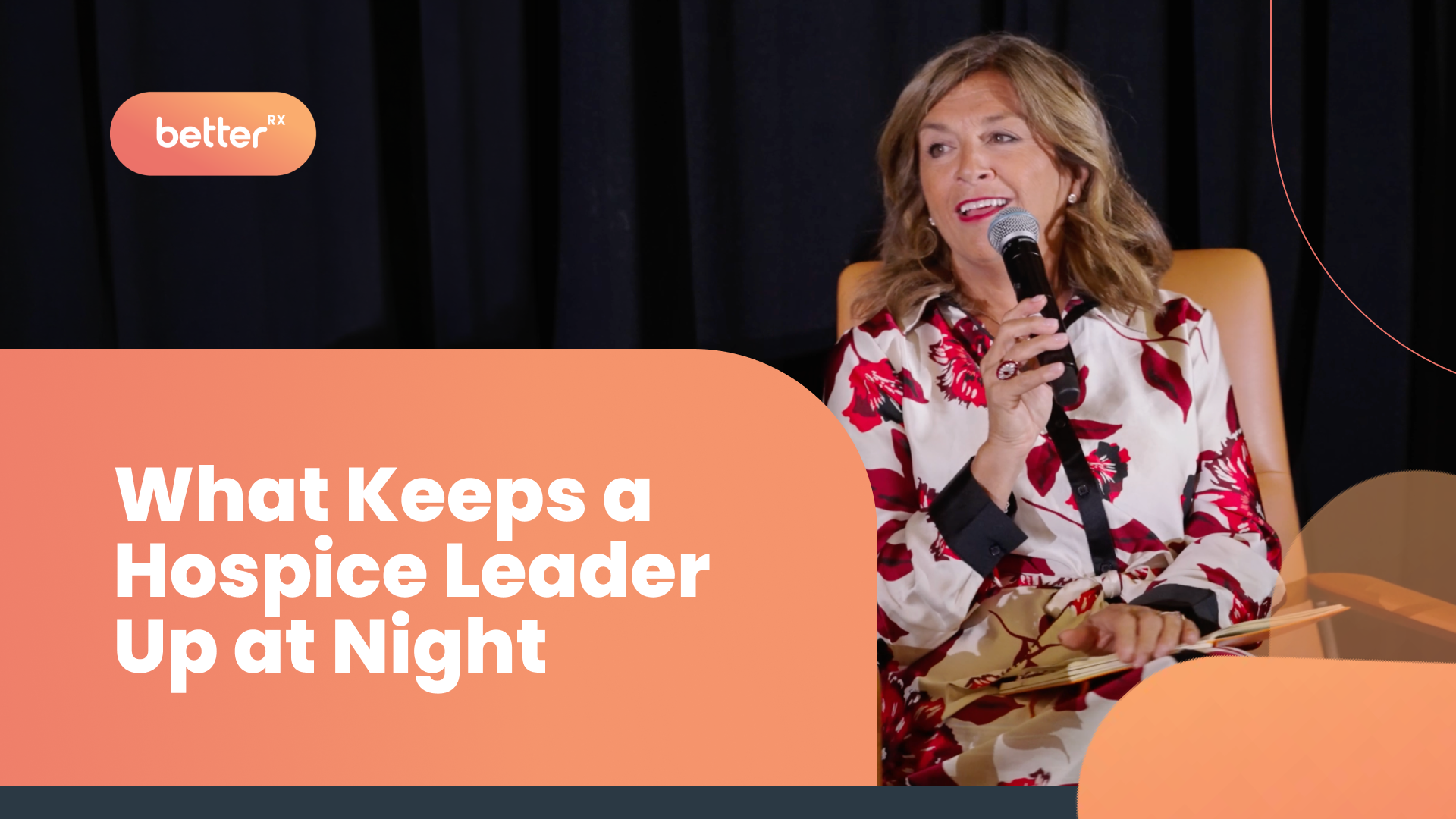
Fraud and abuse enforcement has put the entire hospice industry under a spotlight, and Joni is candid about what that's meant for good actors caught in the crossfire. Agencies have had funding cut off with no timeline for resolution, leaving them unable to discharge the patients they can no longer afford to serve, and with no revenue coming in while they wait. It's what she calls a “sledgehammer effect,” and it's landed across Texas, Arizona, and beyond as hospice draws more federal attention.
Layered on top of that scrutiny is a simple math problem: costs keep rising, regulatory burden keeps growing, and reimbursement isn't keeping pace. A modest funding increase gets absorbed by market adjustments before it ever reaches the bottom line.
For all the operational pressure hospice leaders carry, Joni's answer to what actually keeps her up at night isn't about margins or regulations. It's about her patients. She's quick to point out that she isn't just a hospice executive; she's also still a working hospice nurse, which she says is rare among leaders at her level.
She compares end-of-life care to planning a child's birthday party: months of preparation don't matter if execution fails on the one day it counts.
It's also why she still carries a patient caseload of her own alongside running the agency. Staying close to the day-to-day reality her nurses face keeps her both credible and connected to her team.
Asked what separates a good vendor from a true partner, Joni doesn't lead with price. The most important partnerships are rooted in trust and being heard.
She's candid that the cheapest option isn't always the right one, and that she's walked away from long-standing vendor relationships when they stopped listening to what her agency actually needed.
Asked point-blank what creates the most frustration for her clinicians day to day, Joni's answer was refreshingly short and it wasn't pharmacy.
She credits BetterRX with helping her agency transition to a lower-cost pharmacy solution during a cost-saving push, without sacrificing service or reliability along the way. It's the kind of behind-the-scenes problem that, solved well, simply disappears from a leader's list of worries.
On technology's role in hospice, Joni is direct: agencies that don't adapt will get left behind. Her own team uses technology across every discipline, from bedside nursing to charting, because of what it gives her staff back.
She's candid that technology will never replace the human core of hospice care, but it can lift the administrative weight off nurses so more of their time goes to patients instead of paperwork.
Asked to reflect on how far the industry, and her own agency, have come, Joni didn't hesitate to name what's changed the day-to-day reality for her team since working with BetterRX.
It's the kind of statement that only carries weight coming from someone who has spent her career on the front lines of hospice care, measuring every change not by what it means for a business, but by what it means for the patient at the end of the hall.
Joni's perspective is one hospice leader's view from the field, shaped by her own patients, her own team, and the pressures she navigates every day. She's not alone in facing them. Hospice leaders across the country are working through the same rising costs, scrutiny, and staffing strain, and finding their own paths through it.
See how other hospice leaders are navigating operational pressures.


In hospice care, trust is everything. Families don’t choose a hospice because of a clever ad or a polished brochure. They choose because they...

Let’s clear something up right from the start: choosing hospice care, and the medications that come with it, isn’t about giving up. It’s about...